Thinking about signing up but not ready yet? Here's exactly what you'll need — so when you do start, your assessment can run immediately instead of waiting on a reshoot.
The assessment relies on clearly seeing your motion from each required angle. One clear pitch per angle is enough — clean, well-lit, steady footage matters more than anything else. Slow-motion is preferred when your phone offers it, but regular speed is acceptable.
Tap each view to see exactly where to place the camera.
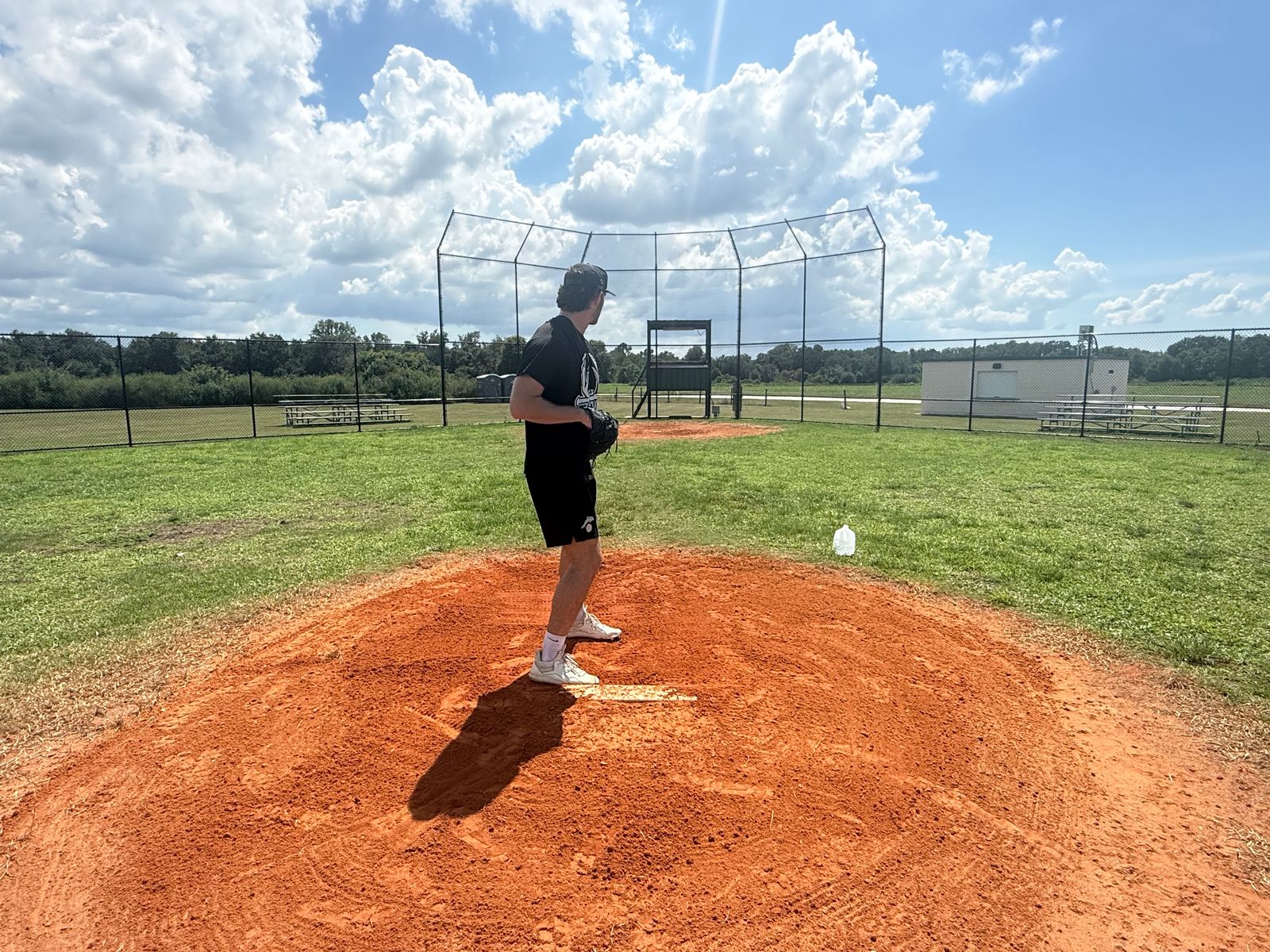 Rear View
View 1 of 4
Rear View
View 1 of 4
Camera directly behind the mound. Keep the full body visible from setup through follow-through.
Do this
Avoid
Before you upload
Missing views, heavy obstruction, motion blur, or footage that doesn’t represent your current delivery may reduce assessment confidence or make certain categories Not Assessable. In some cases, replacement footage may be requested before the assessment begins.
Short of a hands-on screen, these clips let us actually see your mobility instead of guessing from a symptom — each one only takes a few seconds to film.
Tap each test to watch its demonstration.
Perform the hip rotation positions shown in the demo on both sides. Move slowly through your comfortable range, pause for about 2 seconds at the end range, then return. Complete 2 reps each direction on each side. Keep the movement controlled and don’t force extra range.
Five short clips total, all required. Each only takes a few seconds — no special equipment needed. Perform the screen exactly as shown. Move naturally, stay controlled, and do not force extra range.
Apex Motion is currently designed to assess mound pitching deliveries. If you are temporarily shut down from mound work, or otherwise unable to record current mound footage, you may submit previously recorded mound videos.
Prior footage must be clear, complete, and representative of your normal delivery. Use the required camera angles whenever available, keep the full body visible, and upload the original files rather than screen recordings or compressed copies.
Older video may still provide useful information, but it may not accurately represent your current movement, physical capacity, workload, or throwing status. The age and quality of the footage may reduce confidence in certain findings, make some categories Not Assessable, or limit how directly the assessment applies to your current stage of throwing.
Your assessment may use prior mound footage, but any training plan will be built around your current throwing status, restrictions, schedule, and equipment access.
Do not perform high-intent mound throwing solely to create assessment footage unless you have been appropriately cleared to do so.
Your video tells us how you move. This information tells us what you're capable of and what you're working with — both feed directly into your assessment and, if you choose it, your training workbook.
Age, height, weight, handedness, position, level (youth / high school / collegiate / pro), and current + goal velocity.
Years of structured lifting and throwing. Strength numbers if you've trained with loaded lifts — or bodyweight/jump markers if you haven't. Either is fine; just be accurate, not aspirational.
Where you are right now — off-season, in-season, post-season, or new to structured throwing — plus recent workload and any injury history or current restrictions.
Once you sign up, you'll get a link to submit this video and information directly — no back-and-forth required.
Start Your Assessment